Inspect the source behind Antshiv Robotics engineering.
What you can inspect, what it does, what license applies, and how to contribute — nothing else.
Public visibility is not itself a software license. CKE and most historical Antshiv repositories do not currently declare a recognized repository-level license, so reuse and redistribution rights must not be assumed. Antsand remains proprietary product infrastructure, while flight-control releases state their terms individually.
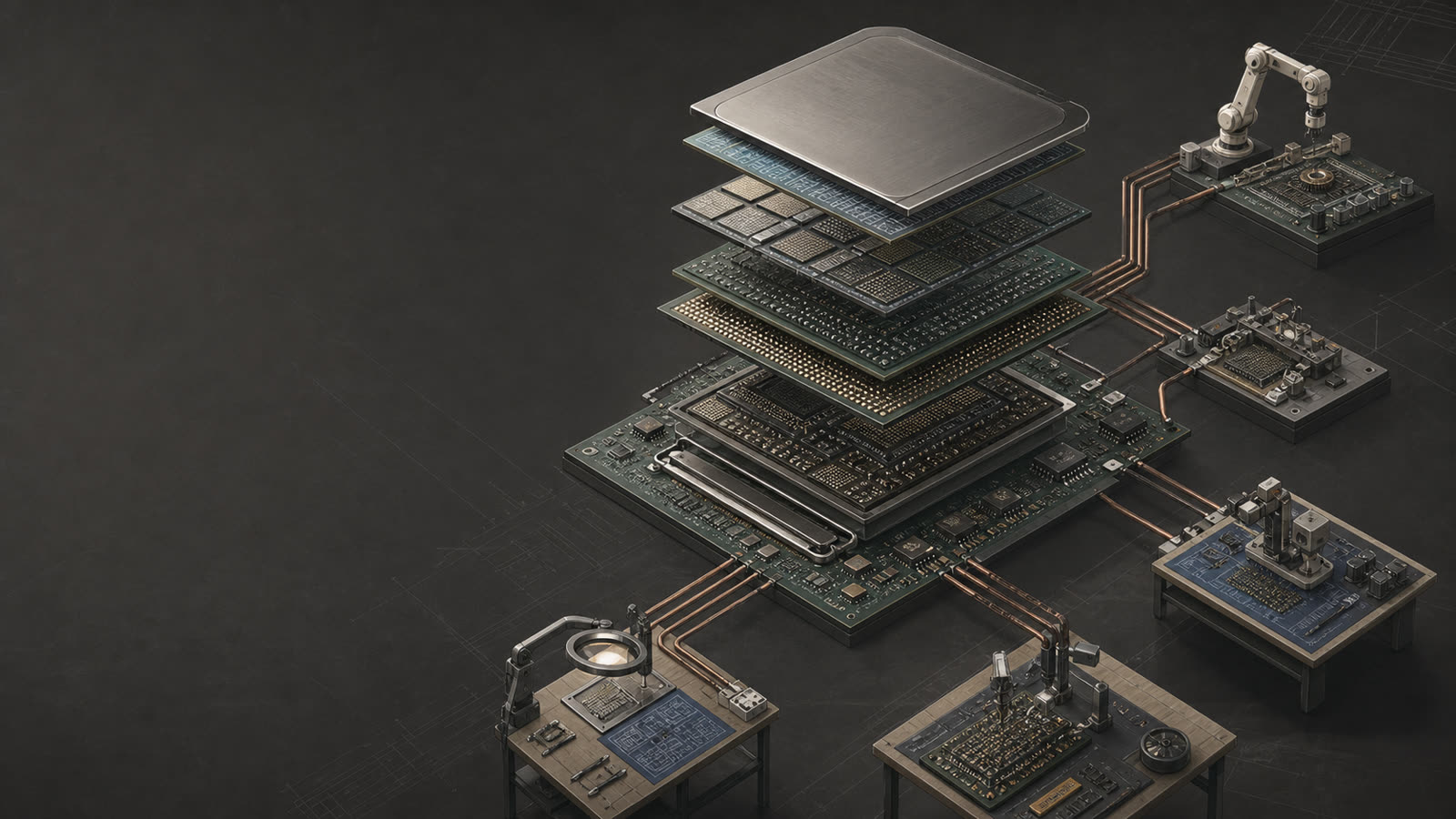
Licenses are stated beside every project
Public visibility is not automatically an open-source license. Each listing shows its exact license status, and where no recognized license exists the project is labeled PUBLIC SOURCE — LICENSE NOT DECLARED.
Exact, not implied
Every repository listed here carries its license status next to the link. Read the license in the repository before reuse.
Look, but ask
CKE and most historical Antshiv repositories do not currently declare a recognized repository-level license. Source is public for inspection and learning — reuse and redistribution rights must not be assumed.
Visibility is not permission
A public repository without a declared license defaults to exclusive copyright in most jurisdictions.
Proprietary work stays out
Antsand and programme-specific products are not open source and are deliberately absent from this inventory.
A curated stack, not a repository dump
The flight-control repositories form one mathematical chain: attitude and quaternion mathematics feed state estimation and inertial navigation; dynamic models and rotor dynamics turn estimated state into forces and moments; control systems close the loop. Everything historical or uncategorized sits behind one archive link.
The CPU AI runtime — PUBLIC SOURCE, LICENSE NOT DECLARED
Open-model inference as generated C with native CPU kernels, ISA-aware dispatch, and numerical parity gates, with training research clearly qualified. Source, documentation, tests, and nightly evidence are public.
Rotations without singularities
Quaternion and rotation mathematics — the representation layer every estimator and controller downstream depends on.
Sensors into state
State-estimation experiments and inertial-navigation work turn IMU readings into attitude, velocity, and position.
State into controlled motion
Rigid-body and system models, rotor dynamics, and controller experiments connect estimated state to forces, moments, and stable behavior.
ThrustStand · AeroDynControlRig · DroneTestRig
Test rigs that take equations and simulation into measured physical behavior. Labeled prototypes and historical experiments — not production hardware.
Controller and aircraft firmware
BLE-connected aircraft code, handheld control, and Nordic microcontroller paths — historical engineering experiments, not finished autonomous products.
What preceded CKE
C-Transformer records the earlier model-specific runtime path whose limitations motivated CKE's circuit and compiler architecture.
Every other repository
Historical and uncategorized work — AI from scratch, HPC, radio, Linux tooling, presentations, and more — lives on the full GitHub profile, without equal prominence here.
Start with a reproducible problem, not a broad rewrite
CKE values the person who finds the problem, establishes the reproduction, and submits the reviewed correction. Recognition survives later refactoring.
Reproduce
Record the model, command, hardware, compiler, environment, expected result, and observed failure.
Bound
Identify the smallest kernel, numerical contract, platform path, test, or documentation gap that explains the issue.
Validate
Run the relevant parity and regression gates. State what was not run and why.
Submit evidence
Open a focused pull request with the causal explanation, measured evidence, risks, and contribution metadata.
Recognition
Contributor recognition is preserved: claims, ownership, and credit stay explicit in every merged change.
Antshiv Robotics builds intelligent systems we can understand all the way down, from mathematical kernels and CPU runtimes to simulation, flight control, and autonomous machines.