Do not take the benchmark, model output, or roadmap on trust.
Antshiv Robotics separates what is measured, demonstrated, in progress, and planned. A claim is useful only when another engineer can find the code, inputs, reference, hardware conditions, result, and known limitation.
This page is the internal map. The underlying repositories, reports, and technical articles remain external evidence sources, not substitutes for explaining what they prove.
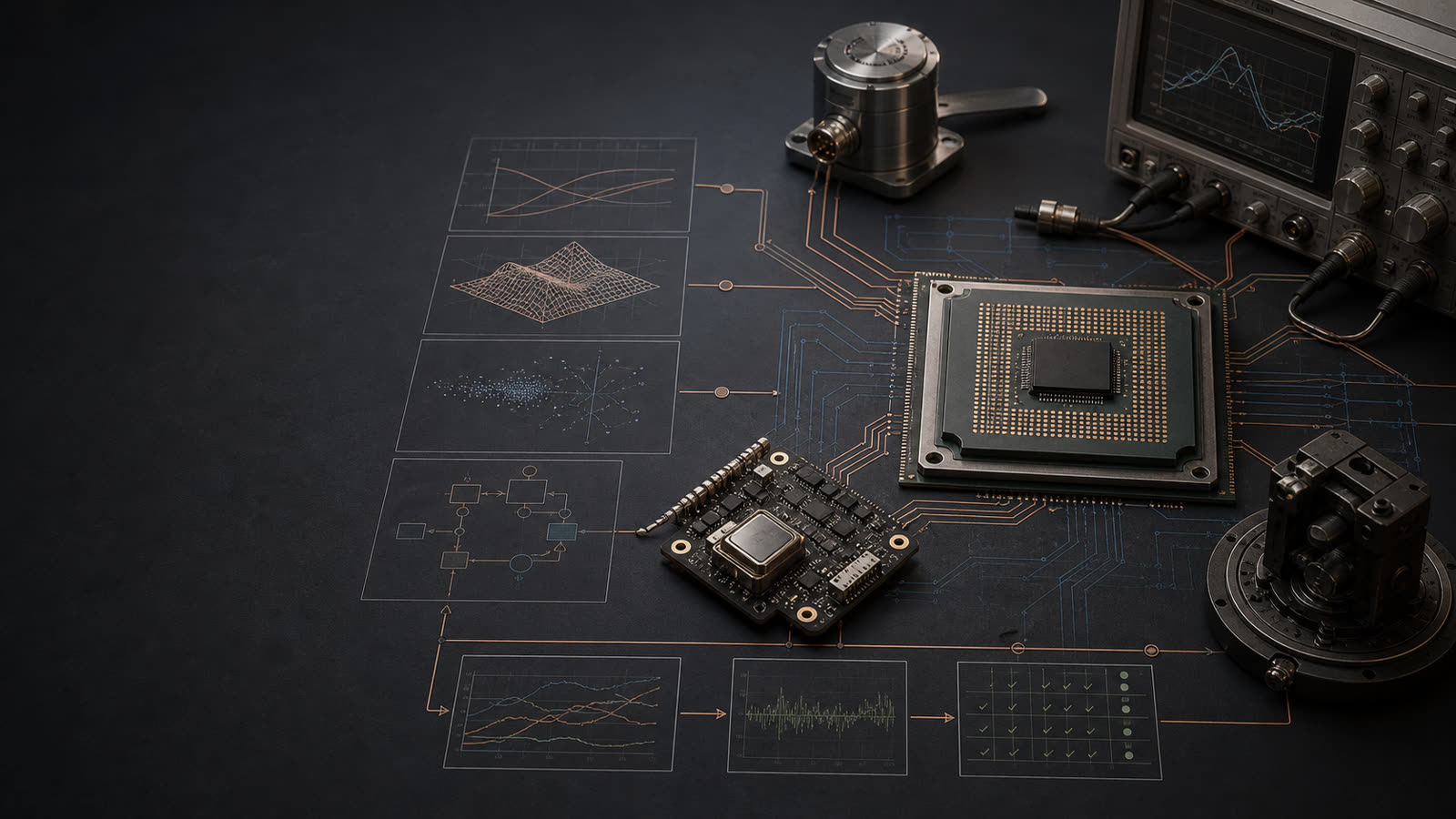
Follow each claim to the artifact that can falsify it
A screenshot or plausible answer is not numerical validation. Each surface below answers a different engineering question.
CKE nightly validation
Pinned model and runtime references, regression lanes, numerical contracts, and visible pass or failure state show what the current code actually supports.
Circuits, kernels, and generated C
Architecture documentation explains how model weights, templates, IR stages, kernel maps, memory planning, and generated execution fit together.
Commits, pull requests, and tests
The source history records the actual correction, review context, regression guard, and evidence boundary instead of reducing the work to a performance headline.
ShivasNotes technical record
Long-form articles preserve derivations, debugging paths, diagrams, caveats, and the reasoning needed to understand why a code change exists.
The result is not complete until another engineer can inspect it
Experiments become useful evidence when the measurements, commands, artifacts, boundaries, and explanation survive beyond the terminal session.

What a defensible engineering result should contain
Identity
Exact source commit, model or input hash, compiler, runtime, ISA, thread count, and hardware.
Reference
A pinned oracle or mathematical expectation and a declared comparison method.
Measurement
Units, warmup, repetitions, phase boundaries, tolerances, and raw or reproducible outputs.
Boundary
What passed, what failed, what was not tested, and which conclusion the evidence does not support.

Antshiv Robotics builds intelligent systems we can understand all the way down, from mathematical kernels and CPU runtimes to simulation, flight control, and autonomous machines.